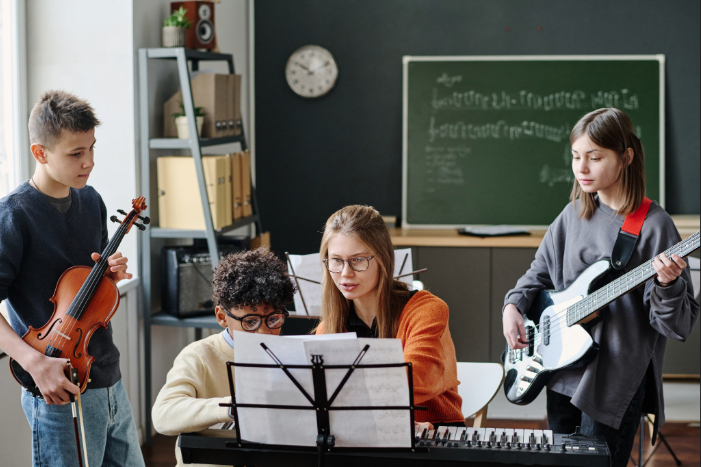
Music lessons can do much more than teach a child how to play an instrument. For many kids, lessons become a steady place to build confidence, practice patience, use creativity, and learn how small efforts add up over time.
Parents often think about music lessons in terms of songs, notes, recitals, or instruments. Those things matter, of course. But the real value often goes deeper. A child who learns music is also learning how to listen, try again, solve problems, and express themselves in a healthy way.
If you are considering music lessons for your child in Rhode Island, it helps to understand what they can gain beyond musical ability. The goal is not to create pressure or expect instant results. The goal is to give your child a positive learning experience that helps them grow.
Music Lessons Teach More Than Notes
Learning music is a full-body and full-mind activity. A child has to listen carefully, move their hands or voice with control, follow directions, remember patterns, and respond to feedback. That makes music lessons different from many other activities.
A student learning piano may need to use both hands at the same time. A young guitarist may need to coordinate finger placement with rhythm. A beginner vocalist may learn how to breathe, listen, and stay relaxed. A band student may learn how their part fits with the rest of the group.
These skills take time, and that is part of the benefit.
Music lessons give kids a structured way to practice effort. They learn that improvement does not usually happen all at once. It happens through repetition, encouragement, and small wins.
That lesson can carry into school, sports, friendships, and other parts of life.
How Music Lessons Build Confidence Over Time
Confidence is not something most children gain from being told they are talented. It usually grows when they experience progress for themselves.
Music gives kids a clear way to see that progress. At first, a song may feel confusing. A rhythm may feel awkward. A note may be hard to find. Then, after a few tries, the child starts to understand it.
That moment matters.
When a student realizes, “I could not do this before, but now I can,” they begin to trust their own ability to learn. That kind of confidence is different from praise alone. It is built through real experience.
Small Goals Help Kids Feel Capable
Beginner music lessons often work best when the goals are small and clear. A child might learn one short melody, one chord, one rhythm pattern, or one section of a song. These small goals give the student something reachable.
Over time, those small steps become bigger skills.
This is especially helpful for children who are shy, cautious, or nervous about trying new things. Music gives them a safe place to practice being brave. They can make mistakes, correct them, and keep going.
Performance Can Build Confidence, But It Should Not Be Forced
Some children enjoy performing. Others need time before they feel ready. Both are normal.
Recitals, school concerts, or family performances can help students feel proud of their work, but performance should not be the only measure of success. For many beginners, the first big victory is simply playing a short piece for a parent or teacher.
Confidence grows best when a child feels supported, not pushed.
How Music Supports Focus and Patience
Focus is one of the most valuable skills a child can develop, and music lessons naturally support it.
During a lesson, a student has to pay attention to sound, timing, posture, finger placement, breathing, or rhythm. They also have to listen to the teacher and make adjustments. That takes concentration.
At first, focus may only last a few minutes. That is okay. Good beginner lessons meet students where they are. Over time, children often become better at staying with a task because music gives them a reason to focus.
Music Teaches Kids to Slow Down
Many children are used to fast results. Music does not usually work that way. A song improves because the student slows down, repeats a section, listens carefully, and tries again.
That process teaches patience.
A child may want to play a song quickly, but the teacher may guide them to practice it slowly first. This can feel frustrating at first, but it helps students learn an important lesson: slowing down often leads to better results.
That mindset can help outside of music too. A child who learns to slow down while practicing may also become more patient with homework, reading, problem-solving, or other new skills.
Why Creativity Matters for Young Students
Creativity is not just about making up songs or becoming an artist. It is about learning how to explore ideas, make choices, and express feelings.
Music gives children a healthy outlet for that.
A student can play a song softly or loudly. They can hear how a melody changes when it is faster or slower. They can experiment with rhythm, sound, and mood. Even simple beginner activities can help children feel creative.
For younger students, this can be especially important. Kids do not always have the words to explain how they feel. Music gives them another way to express energy, excitement, frustration, calm, or joy.
Creativity Also Builds Problem-Solving
Music encourages flexible thinking. If one way of practicing does not work, the teacher may try another approach. A rhythm might be clapped first, then played. A tricky section might be broken into smaller parts. A song might be learned by listening before reading notes.
This helps children learn that there is often more than one way to solve a problem.
That kind of creative thinking can support learning in many areas, not just music.
How Parents Can Encourage Progress Without Pressure
Parents play a big role in how children feel about music lessons. The goal is to support progress without turning practice into a daily battle.
One of the best things parents can do is keep practice simple and consistent. For many beginners, short practice sessions are better than long ones. Five to ten focused minutes can be more useful than forcing a child to sit for a long time when they are tired or frustrated.
Praise Effort, Not Just Results
Instead of only praising a song when it sounds perfect, notice the effort behind it.
You might say:
“You kept trying even when that part was tricky.”
“I can hear that rhythm getting steadier.”
“You remembered more of the song today than yesterday.”
This helps children connect practice with improvement. It also teaches them that mistakes are part of learning, not something to fear.
Keep Music Positive at Home
A home environment can make lessons feel more enjoyable. Let your child show you what they learned. Ask simple questions. Listen without correcting every mistake. Celebrate small progress.
Parents do not need to be musicians to help. Being interested and encouraging is often enough.
Choosing the Right Music Lesson Experience
The teacher and lesson environment matter. Children usually do best with instructors who are patient, clear, and encouraging. A good beginner teacher understands that every student learns at a different pace.
Some students are excited and outgoing. Others are quiet and careful. Some need more repetition. Others want new challenges quickly. Music lessons should be flexible enough to support those differences.
If your child is just starting, look for lessons that feel welcoming and practical. The best early experiences help students feel comfortable while still giving them structure.
For Rhode Island families, music lessons at a local store can also make it easier to ask questions, get guidance, and find support as your child grows.
Music Lessons Help Kids Grow Beyond the Instrument
The benefits of music lessons for kids go far beyond learning songs. Music can help children build confidence, strengthen focus, practice patience, and explore creativity. These skills can support them in school, at home, and in everyday life.
Every child’s path will look different. Some students move quickly. Others need more time. Some love performing. Others enjoy learning quietly. What matters most is that lessons feel encouraging, steady, and suited to the child.
Looking for music lessons in Rhode Island? Bedrossian Music in Warwick has been serving musicians, parents, educators, and students since 1978. Our team offers personalized support for young beginners, helping families find a lesson experience that feels practical, encouraging, and focused on each student’s growth.