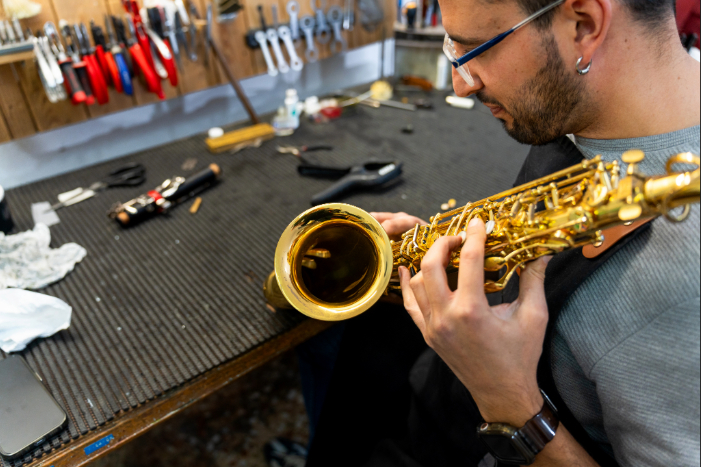
A saxophone that is not working properly can make band class frustrating fast. A student may practice, listen carefully, and try their best, but if the instrument has a leak, sticky key, loose part, or reed problem, it can still feel difficult to play.
That is one reason saxophone repair matters so much for student musicians. Beginners often assume every squeak, weak note, or strange sound is their fault. Sometimes it is simply part of learning. Other times, the saxophone needs attention.
For parents, the challenge is knowing the difference. You do not need to be a repair technician to spot common warning signs. You just need to know what to listen for, what to check, and when it is time to stop guessing and have the saxophone looked at by someone who repairs instruments regularly.
If you are looking for saxophone repair in Rhode Island, here are the common problems students run into and what families should know.
Why Student Saxophones Often Need Repair
Student saxophones work hard during the school year. They travel to and from school, sit in cases, go on buses, get moved around classrooms, and are handled by young players who are still learning how to care for them.
Even careful students can run into problems. Saxophones have many moving parts. The keys, pads, rods, springs, corks, and screws all need to work together. If one part is bent, loose, worn, or out of adjustment, the instrument may not seal properly.
That can affect the sound right away.
A saxophone is also a large instrument compared to many other beginner band instruments. It has a neck, mouthpiece, ligature, reed, body, keys, and case. Each part has to be handled correctly. If the neck gets bumped or the keys are pressed while the instrument is being assembled, small problems can appear over time.
The good news is that many saxophone issues are common and repairable. The sooner they are checked, the easier they often are to fix.
Common Saxophone Problems Students Notice First
Students may not know the technical name for a repair issue, but they usually know when something feels wrong. Parents may hear complaints like, “It sounds weird,” “This note will not come out,” or “My saxophone feels stuck.”
Those comments are worth paying attention to.
Sticky Keys
Sticky keys are one of the most common saxophone problems. A key may go down and come back slowly, or it may not return all the way.
This can happen because of moisture, dirt, sticky pads, bent parts, or normal wear. Students may notice that certain notes sound delayed, muffled, or inconsistent.
A sticky key can make playing feel clumsy. It can also cause the student to press harder than necessary, which may lead to more problems. If a key is not moving freely, it is better to have it checked rather than forcing it.
Air Leaks
A saxophone needs pads to seal properly over tone holes. If a pad does not close all the way, air escapes. This is called a leak.
Leaks can make notes sound weak, fuzzy, or hard to produce. Some notes may not respond at all. Low notes are often where students notice leaks first because they need a good seal to speak clearly.
A beginner may think they are not using enough air, when the real issue is that the instrument is not sealing correctly. If your child is suddenly struggling with notes they used to play, a leak may be the reason.
Weak or Thin Sound
A weak sound can come from several causes. Sometimes the student is still developing breath support. Sometimes the reed is too soft, too hard, chipped, or not placed correctly. Sometimes the mouthpiece setup is the issue.
But a weak sound can also point to a saxophone repair problem, especially if it appears suddenly.
If the sound used to be stronger and now feels airy, uneven, or difficult, the instrument may need adjustment. A repair technician can check whether the keys are sealing properly and whether any parts have shifted.
Mouthpiece and Reed Problems That Seem Like Repairs
Not every saxophone problem is caused by the instrument itself. Many beginner issues start with the reed, mouthpiece, or ligature.
This is why it helps to check the simple things first.
Reed Problems
The reed is the thin piece of cane or synthetic material that vibrates when the student blows air through the mouthpiece. If the reed is damaged, too old, too hard, too soft, or placed incorrectly, the saxophone may squeak, sound weak, or feel hard to play.
A chipped reed can cause sudden problems. A reed that is too hard can make playing feel exhausting. A reed that is too soft may sound thin or unstable.
Students should keep extra reeds in their case and learn how to place them correctly. If changing the reed fixes the issue, the saxophone itself may not need repair.
Mouthpiece and Ligature Issues
The mouthpiece also matters. If it is cracked, dirty, or not fitted correctly, the sound can suffer. The ligature, which holds the reed in place, should be snug but not overtightened.
If the reed slips, the ligature is loose, or the mouthpiece is not placed correctly on the neck cork, the saxophone may be difficult to play.
Parents do not need to diagnose all of this perfectly. But if your child is struggling, it is helpful to check whether the reed is in good condition and properly attached before assuming the whole saxophone is broken.
When to Stop Playing and Get the Saxophone Checked
Some saxophone issues can wait for a normal repair appointment. Others should be checked before the student keeps playing.
Stop playing and get the saxophone checked if a key is bent, stuck, loose, or not returning properly. Do not try to force it back into place. Saxophone keys are connected to other parts of the instrument, and forcing one piece can cause more damage.
You should also stop if the neck is bent, the mouthpiece will not fit securely, the instrument was dropped, or the case was hit hard with the saxophone inside.
If your child hears a rattling sound, sees a loose screw, or notices a spring out of place, it is time to have someone look at it. Small parts can be easy to lose, and a simple adjustment can become more complicated if the student keeps playing.
A sudden change in sound is another warning sign. If the saxophone was working well and then becomes difficult overnight, something may have shifted.
How Regular Maintenance Prevents Bigger Problems
Regular maintenance helps keep a student saxophone easier to play throughout the school year. It does not mean the instrument will never need repair, but it can prevent small issues from becoming larger ones.
Students should swab the instrument after playing, handle the neck carefully, avoid eating right before playing, and keep the saxophone in its case when not in use. The case should be closed and latched before being picked up.
Parents can also help by listening for changes. If your child suddenly sounds much worse, gets frustrated with notes that used to work, or complains that the instrument feels different, do not ignore it. A quick check can save time and stress.
Saxophones benefit from occasional professional attention, especially for school musicians who use them often. A technician can check pads, key alignment, corks, springs, screws, and general playability.
For families dealing with recurring sound or key problems, professional musical instrument repairs can help identify whether the issue is the instrument, the setup, or normal beginner adjustment.
How Parents Can Help Student Saxophone Players
Parents do not need to know every part of the saxophone to support a student. A few practical habits can help.
Encourage your child to assemble and put away the saxophone slowly. Rushing is when many accidental bends and bumps happen. Remind them not to grab the instrument by the keys and not to leave it on a chair, bed, floor, or music stand.
Keep extra reeds at home and in the case. Many “repair problems” are actually reed problems, and having a spare can prevent panic before band class or a concert.
Ask your child how the instrument feels, not just how practice sounds. If they say a note will not come out, a key feels stuck, or the saxophone suddenly feels harder to play, take that seriously.
When in doubt, get it checked. It is better to find out that the saxophone only needs a small adjustment than to let a minor issue become a bigger repair.
A Working Saxophone Makes Learning Easier
Learning the saxophone takes patience. Students have to build breath control, finger coordination, rhythm, tone, and confidence. A saxophone that does not work properly makes all of that harder than it needs to be.
Sticky keys, leaks, weak sound, reed issues, and loose parts are all common problems for student players. Some are simple. Some need professional repair. The important thing is not to blame the student before checking the instrument.
Looking for saxophone repair in Rhode Island? Bedrossian Music in Warwick offers in-house repairs for student instruments, school musicians, and experienced players. Serving Rhode Island musicians since 1978, our team can help diagnose common saxophone problems, explain what is happening, and provide the personalized support families need during the school year.